
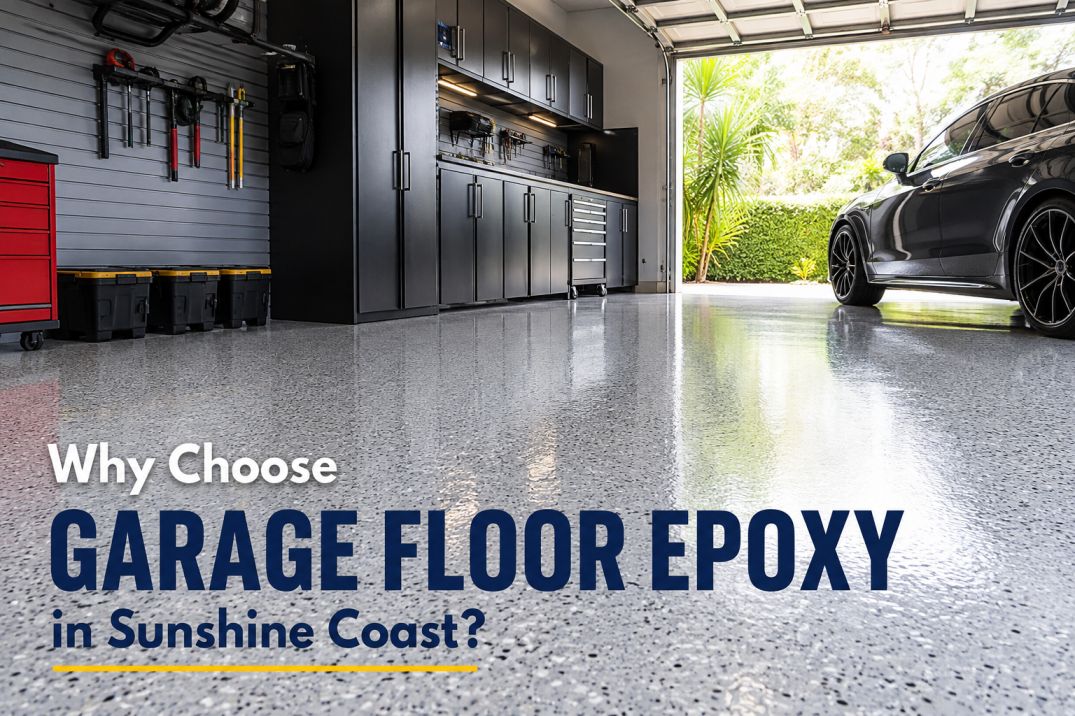
A garage floor deals with more than everyday foot traffic. Vehicles bring in water, dirt, oil, tyre residue, and road chemicals, while temperature changes can affect exposed concrete over time. Small cracks, stains, dust and surface wear can make an otherwise useful garage harder to maintain. Choosing the right floor finish can improve durability, cleanliness and day-to-day usability without changing the structure of the garage. For homeowners and property owners comparing Garage Floor Epoxy in Sunshine Coast, the main considerations are surface preparation, coating performance, moisture conditions, slip resistance and long-term maintenance.
What Is Epoxy Garage Flooring?
Epoxy flooring is a resin-based floor system applied over a prepared concrete surface. Once the resin and hardener react, they form a dense coating that bonds to the substrate. Depending on the system selected, the finished floor can provide resistance to abrasion, chemicals, stains and regular vehicle traffic.
The performance of an epoxy floor depends heavily on preparation. Concrete may need diamond grinding, cleaning, crack repairs and moisture testing before the coating is installed. Applying epoxy over poorly prepared concrete can lead to peeling, bubbling or premature failure, regardless of the quality of the resin itself.
In residential garages, epoxy can also create a more uniform surface than untreated concrete. This makes routine cleaning easier because dust, spills and marks are less likely to become embedded in an unfinished floor.
Why Epoxy Works Well in Sunshine Coast Garages
The Sunshine Coast climate creates several practical considerations for garage flooring. Humidity, rainfall, moisture movement and changing temperatures can affect concrete surfaces and coating performance. A properly specified epoxy system can provide a sealed surface while reducing the amount of exposed concrete.
A professional garage floor coating Sunshine Coast system should therefore be selected according to the condition of the slab and the environment in which it will be used. Moisture testing is particularly important because trapped moisture beneath a coating can contribute to blistering or adhesion problems.
Another consideration is vehicle use. A garage floor may experience concentrated loads from tyres, repeated turning movements and occasional impact from tools or equipment. A correctly installed epoxy system can handle these demands when the coating thickness and preparation are appropriate for the application.
Easier Cleaning and Maintenance
One of the practical reasons homeowners choose epoxy is easier maintenance. Bare concrete is porous and can absorb oils and other liquids. Cleaning stained concrete can require considerable scrubbing, particularly when spills have remained on the surface for an extended period.
A sealed epoxy surface provides fewer places for contaminants to penetrate. Routine sweeping and mopping can remove most everyday dust and dirt. Vehicle-related spills should still be cleaned promptly because no floor coating is completely immune to staining or chemical exposure.
Regular maintenance is relatively straightforward. Avoiding harsh cleaning chemicals unless they are compatible with the coating can help preserve the surface finish. Heavy equipment should also be moved carefully to minimise impact damage.
Different Epoxy Finishes for Garage Floors
Epoxy flooring is available in several visual and functional finishes. The choice depends on the appearance desired, the amount of traffic and the practical requirements of the garage.
Metallic epoxy flooring Sunshine Coast can create a decorative surface with flowing patterns and visual depth. It is generally considered when appearance is a major factor rather than when a simple utility finish is required.
Another option is flake epoxy flooring Sunshine Coast, which incorporates decorative flakes into the coating system. Flakes can add texture and help make everyday dirt and minor marks less visually obvious. They can also contribute to the overall slip-resistant design when combined with an appropriate topcoat.
For a simpler appearance, a solid colour epoxy floor Sunshine Coast system provides a consistent finish across the garage. Solid colours can suit homeowners who prefer a clean, understated surface without decorative elements.
Surface Preparation Matters
The quality of an epoxy floor is closely linked to what happens before the coating is applied. Concrete should be assessed for contamination, cracks, moisture and surface strength before installation begins.
Mechanical preparation such as industrial diamond grinding can remove weak surface material and create a suitable profile for coating adhesion. Oil contamination may require additional treatment because oil can interfere with bonding.
Cracks should also be evaluated rather than simply covered. Some cracks are cosmetic, while others may indicate movement within the slab. Repair methods should be selected according to the type and severity of the cracking.
Moisture testing is another important step, particularly in areas exposed to humidity or moisture movement. A coating installed over unsuitable moisture conditions can develop problems even when the visible concrete appears dry.
Slip Resistance and Garage Safety
A smooth floor may look attractive, but garages can become slippery when water, cleaning products or vehicle fluids are present. Slip resistance should therefore be considered when selecting an epoxy system.
Anti-slip aggregates can be incorporated into the coating to increase surface texture. The amount and type of aggregate should be matched to the intended use because excessive texture can make cleaning more difficult.
For homeowners using their garage as a workshop, storage area or general utility space, a balance between cleanability and traction is usually more practical than choosing appearance alone.
Durability and Long-Term Value
Epoxy flooring can provide a durable surface when the concrete substrate is suitable and installation follows the requirements of the coating system. However, durability should not be treated as a property of the resin alone.
Factors such as slab condition, preparation quality, coating thickness, vehicle traffic, UV exposure and maintenance can all influence service life. Areas exposed to direct sunlight may also require a suitable UV-resistant topcoat to maintain appearance and performance.
This is where experienced epoxy flooring services in Australia can differ in approach. A complete system should be considered rather than choosing a coating product based only on its advertised characteristics.
Garage Flooring and Local Installation Conditions
Sunshine Coast properties can vary considerably in construction age, slab condition and exposure to moisture. A garage in a newer home may have different preparation requirements from an older slab with existing cracks, oil contamination or surface deterioration.
For example, Resin Masters uses mechanical preparation and moisture assessment as part of its approach to epoxy flooring installations. These steps are relevant because the coating needs a sound substrate to achieve reliable adhesion.
The choice of topcoat can also influence the finished system. Polyaspartic coatings may be considered where improved UV stability, chemical resistance or faster return to service is required.
Pro Tip
Before choosing a garage epoxy system, inspect the concrete rather than selecting a finish based only on colour or appearance. Ask about moisture testing, mechanical preparation, crack treatment, coating thickness and the recommended topcoat. These factors have a greater influence on long-term performance than the decorative finish alone.
Is Epoxy Suitable for Every Garage?
Epoxy is not automatically suitable for every concrete garage floor. Excessive moisture, significant slab movement, severe structural cracking or contaminated concrete may require additional work before coating.
The existing condition of the floor should therefore be assessed before installation. In some situations, repairs or moisture mitigation may be necessary. Where the slab has substantial structural problems, a coating should not be treated as a substitute for concrete repair.
The intended use also matters. A basic residential garage may need a different specification from a workshop that regularly handles chemicals, heavy equipment or machinery.
Epoxy Garage Flooring vs Bare Concrete
Bare concrete is simple and relatively inexpensive to maintain initially, but it remains porous and can generate surface dust. Epoxy creates a sealed finish that can improve resistance to stains and simplify cleaning.
The comparison is not only about appearance. A properly installed coating can change how the garage is maintained and used. However, the initial installation requires greater preparation and planning than leaving concrete untreated.
For this reason, homeowners should consider the condition of their existing floor, expected vehicle use, moisture exposure and desired maintenance requirements before selecting a system.
Frequently Asked Questions
1. How long does garage epoxy flooring last?
The service life varies according to preparation, coating specification, traffic, maintenance and environmental exposure. A properly installed system on a suitable concrete slab can provide long-term performance, while poor preparation can significantly shorten its life.
2. Can epoxy be installed over cracked concrete?
Minor cracks can often be repaired before coating, but the correct treatment depends on the cause and movement of the crack. Structural or actively moving cracks require assessment before an epoxy system is installed.
3. Is epoxy flooring slippery when wet?
Epoxy can become slippery when contaminated with water or other liquids, particularly when the surface is smooth. Anti-slip aggregates can be incorporated into the system to improve traction.
4. Can epoxy garage flooring handle vehicle traffic?
Yes, a properly specified epoxy system can handle normal residential vehicle traffic. The coating specification and substrate preparation should reflect the expected loads, tyre movement and frequency of use.
5. Does epoxy require regular maintenance?
Epoxy generally requires routine cleaning rather than complex maintenance. Sweeping, mopping with compatible cleaning products and promptly removing oil or chemical spills can help maintain the surface.
Also Read:- Best Flake Epoxy Flooring in Northern NSW Options