
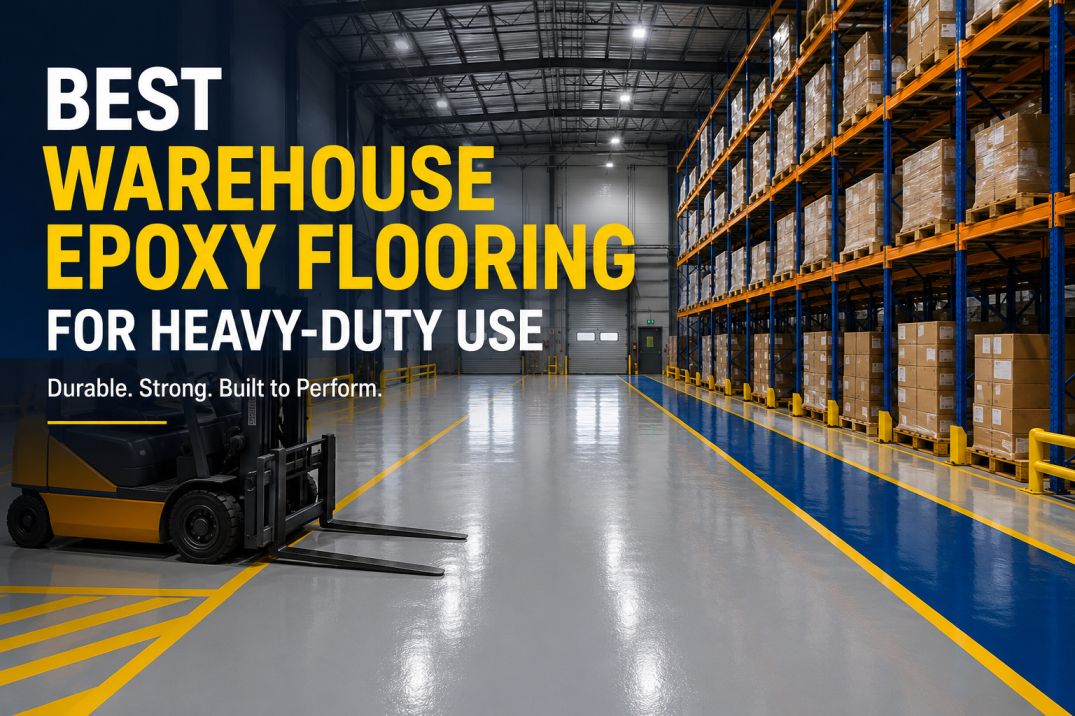
Warehouses operate under demanding conditions where flooring must withstand constant movement, heavy equipment, material handling and regular cleaning. Unlike ordinary commercial floors, warehouse surfaces experience repeated pressure from forklifts, pallet jacks, storage racks and industrial machinery. A suitable flooring system must therefore offer durability, load resistance, surface protection and long-term performance. Choosing the right warehouse epoxy flooring system helps protect the concrete underneath while providing a smooth, practical surface that supports daily operations. The selection should depend on traffic levels, operational requirements, environmental conditions and the type of materials handled within the facility.
Why Epoxy Flooring Is Suitable for Heavy-Duty Warehouses
Concrete is commonly used in warehouse construction because of its strength and availability. However, untreated concrete can gradually deteriorate due to abrasion, impact, moisture penetration and chemical exposure. Dust generation, surface cracking and staining can also create maintenance problems.
Epoxy coatings provide a protective layer over prepared concrete. When correctly specified and installed, they bond with the substrate to create a hard-wearing surface that can handle demanding warehouse activities.
The main advantages include:
- Abrasion resistance: Helps protect against wear caused by forklifts, pallet movement and regular foot traffic.
- Impact protection: Reduces surface damage from dropped tools, equipment and materials.
- Dust control: Seals exposed concrete and limits dust produced by surface deterioration.
- Chemical resistance: Provides protection against selected oils, cleaning agents and industrial chemicals.
- Easy maintenance: Creates a smoother surface that is easier to sweep, scrub and maintain.
- Improved visibility: Different colours can help identify walkways, storage areas and operational zones.
The actual performance depends on coating thickness, resin formulation, concrete condition and installation quality.
Types of Epoxy Flooring for Warehouse Applications
Not every warehouse requires the same flooring specification. A distribution centre with continuous forklift movement has different requirements from a storage facility handling lightweight packaged goods. Understanding the available systems helps determine the most appropriate solution.
1. High-Build Epoxy Flooring
High-build epoxy systems are designed to provide a thicker protective coating than standard epoxy paints. They are suitable for facilities experiencing regular vehicle movement, mechanical abrasion and moderate industrial wear.
Their thickness helps create a more substantial protective layer over prepared concrete. Depending on the product specification, these systems can also offer resistance to selected chemicals and impact-related damage.
High-build coatings are particularly useful in warehouses where floor protection and easier maintenance are important operational considerations.
2. Epoxy Flake Flooring
Flake epoxy systems combine a coloured resin base with decorative flakes and a protective topcoat. Although often associated with commercial and residential spaces, they can also be specified for certain warehouse environments.
The texture and finish can be adjusted depending on the required slip resistance. However, the system must be selected according to the expected vehicle traffic and cleaning procedures.
3. Self-Levelling Epoxy Flooring
Self-levelling epoxy creates a relatively smooth and seamless surface. It is commonly used where consistent floor levels, easier cleaning and a uniform appearance are required.
Before installation, the concrete must be assessed for cracks, uneven sections and moisture problems. Self-levelling materials should not be treated as a replacement for structural concrete repairs.
4. Polyaspartic Protective Coatings
Polyaspartic coatings are often used as protective topcoats over suitable epoxy systems. They can provide additional abrasion and UV resistance, depending on the formulation.
Resin Masters uses different resin flooring systems depending on the surface requirements and intended application. The choice between epoxy and other protective coatings should be based on the conditions within the warehouse rather than appearance alone.
Important Factors When Selecting Warehouse Epoxy Flooring
Selecting a suitable flooring system requires an assessment of how the warehouse operates. Several technical factors influence the coating’s performance and expected service life.
Load-Bearing and Traffic Requirements
Heavy machinery, loaded forklifts and pallet storage create repeated stress on warehouse floors. The coating must be suitable for the expected traffic, but it is important to understand that epoxy is not a structural reinforcement system.
The condition and strength of the existing concrete remain critical. Areas with damaged or weak concrete may require repairs before applying any coating.
Chemical and Moisture Exposure
Some warehouses handle lubricants, cleaning chemicals, oils and other substances that can damage untreated concrete. The selected resin system should have documented resistance to the specific chemicals present in the facility.
Moisture is another important consideration. Excessive moisture vapour transmission from the concrete can cause blistering, bubbling or coating failure if the wrong system is installed.
Slip Resistance
A smooth floor may be easier to clean, but it can become slippery when exposed to water, oils or other liquids. Slip resistance should be considered alongside the warehouse’s cleaning methods and operational activities.
In Australia, slip resistance can be assessed using applicable testing methods under AS 4586. The appropriate classification depends on the environment and the risks associated with its use.
Maintenance Requirements
Warehouses need flooring that can be maintained without disrupting daily activities. Seamless resin surfaces generally have fewer joints where dirt and debris can accumulate.
The selected coating should also be compatible with the cleaning equipment and chemicals used by the facility.
Warehouse Flooring Solutions Across Queensland and Northern NSW
Warehouse conditions vary across industrial locations because of differences in building design, operational requirements and environmental exposure.
Businesses considering warehouse epoxy flooring Brisbane may need systems suitable for distribution centres, manufacturing facilities and logistics operations. In coastal industrial environments, warehouse epoxy flooring Gold Coast projects may also require consideration of moisture exposure and cleaning requirements.
For facilities in warehouse epoxy flooring Logan service areas, the selection should account for equipment movement, storage loads and the condition of existing concrete. Similarly, warehouse epoxy flooring Sunshine Coast projects may involve different environmental and operational considerations depending on the facility.
Industrial properties requiring warehouse epoxy flooring Toowoomba can benefit from systems selected according to machinery use, traffic frequency and maintenance demands. Businesses seeking warehouse epoxy flooring Northern NSW solutions should also consider the specific conditions of their buildings rather than relying on a standard coating specification.
For facilities requiring warehouse epoxy flooring Ipswich, the floor preparation process and coating thickness should be determined by the intended application.
The Importance of Professional Floor Preparation
Even a high-quality resin coating can fail if the concrete is not prepared correctly. Surface preparation is one of the most important stages of any warehouse flooring project.
The process generally involves diamond grinding to remove contaminants, existing coatings and weak surface material. Cracks, joints and damaged sections are assessed and repaired where necessary.
Moisture testing is also important because excessive moisture can affect adhesion and coating performance. Once preparation is complete, the appropriate primer and resin layers are applied according to the manufacturer’s specifications.
For industrial epoxy flooring, preparation requirements may vary depending on the condition of the substrate, the selected coating system and the expected operating environment.
Other Applications and Flooring Considerations
The same resin technologies used in warehouses can be adapted for different environments. For example, garage floor epoxy is commonly selected for residential and commercial garages where resistance to vehicle-related wear, oil stains and routine cleaning is required.
In facilities where a consistent appearance is preferred, solid colour epoxy flooring provides a uniform finish that can also help distinguish different working areas.
However, a coating suitable for a garage or general commercial space should not automatically be considered appropriate for a heavy-duty warehouse. Load requirements, coating thickness and resistance specifications must always be evaluated separately.
Pro Tip: Assess the Concrete Before Choosing a Coating
Before selecting a flooring system, arrange a detailed assessment of the existing concrete. Check for cracks, surface contamination, moisture issues, previous coatings and areas showing signs of deterioration. Identify the heaviest equipment operating on the floor and consider how frequently different sections are used.
This assessment helps determine the preparation method, primer, coating thickness and protective topcoat required. It also reduces the likelihood of premature coating failure caused by unsuitable specifications.
Conclusion
The best warehouse flooring system depends on the facility’s operational demands, concrete condition, traffic levels and exposure to chemicals or moisture. High-build epoxy, self-levelling systems and suitable protective topcoats each serve different purposes. Correct surface preparation and product selection are equally important for achieving reliable results. Resin Masters considers these factors when determining suitable resin flooring systems for industrial and commercial environments.
Frequently Asked Questions
1. What is the best epoxy flooring for heavy-duty warehouses?
High-build epoxy systems are commonly considered for heavy-duty warehouse environments because they provide a substantial protective coating. The correct specification depends on forklift traffic, equipment loads, chemical exposure and concrete condition.
2. How long does warehouse epoxy flooring last?
The lifespan depends on coating quality, installation standards, surface preparation, traffic intensity and maintenance. A properly installed system can provide several years of service, although heavily used areas may require maintenance or recoating sooner.
3. Can forklifts operate on epoxy flooring?
Yes. Suitable industrial epoxy systems can accommodate forklift traffic when installed over structurally sound concrete and specified for the expected operating conditions. The coating thickness, abrasion resistance and concrete strength should be assessed before installation.
4. Is epoxy flooring resistant to chemicals and oil spills?
Many epoxy systems resist selected oils, fuels, cleaning agents and industrial chemicals. However, resistance varies between formulations. The manufacturer’s chemical resistance data should be checked against the substances handled in the warehouse.
5. How long does it take to install warehouse epoxy flooring?
Installation time depends on the floor area, concrete condition, preparation requirements, coating system and curing conditions. Surface grinding, repairs, moisture testing and application can take several days. The floor should only return to vehicle traffic after the coating has reached the required curing stage.
Also Read:- Best Solid Colour Epoxy Flooring Contractor in Australia